


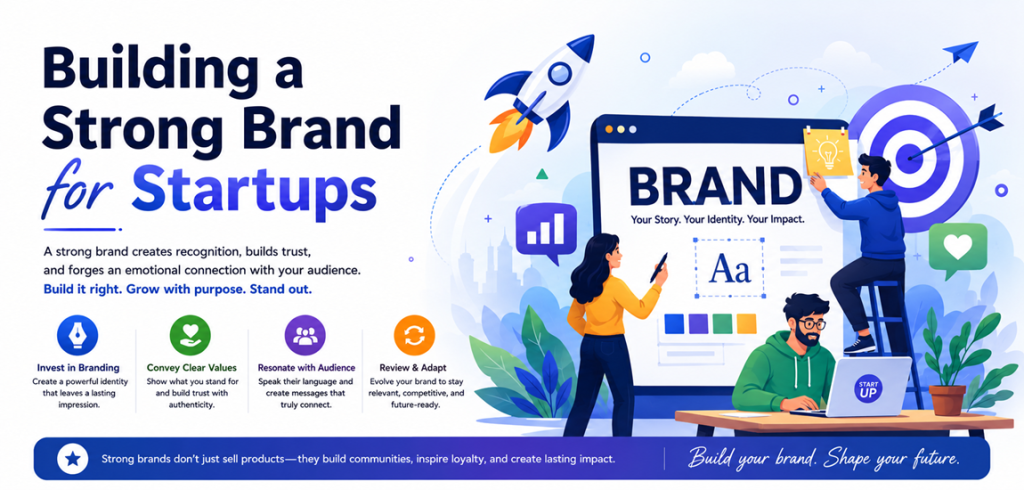
Pic Made by AI
Branding is the cornerstone of any successful business. For startups, building a strong brand early on can make the difference between sticking out in a crowded market and becoming lost in the noise. Your brand is more than simply a logo; it is people’s perceptions of your company, the story you tell, and the emotional connection you establish with your audience.
To build a strong startup brand, focus on these key areas:
1. Invest in Branding Efforts
Why Branding Matters
Branding is more than simply a name and a logo; it includes your company’s identity, positioning, and commitment to customers. It affects trust, credibility, and client loyalty. Lucidpress found that consistent branding across all platforms can improve income by up to 23%.
Key Steps in Branding Investment
- Create a Distinct Visual Identity: A strong logo, color scheme, and typography enhance brand recall. Think of companies like Airbnb—their logo and color palette immediately evoke a sense of travel and community.
- Develop a Brand Voice: Whether it’s professional, playful, or innovative, your tone of communication should reflect your brand personality.
- Build a Compelling Website & Social Media Presence: In the digital age, your website and social media channels act as your storefront. Investing in a well-designed website with engaging content improves credibility and reach.
- Trademark Your Brand: Protect your intellectual property to avoid legal issues as you scale.
Case Study: Slack
Slack, the workplace communication platform, has invested heavily in branding from day one. Their branding is fun, user-friendly, and visually appealing, making business communication feel less corporate and more engaging. Their use of bright colors, an easy-to-remember logo, and a friendly tone set them apart from competitors like Microsoft Teams. This branding consistency helped Slack scale rapidly and attract millions of users worldwide.
2. Convey Clear Values
Why Values Matter
Your brand values form your identity, drive decision-making, and contribute to emotional relationships with customers. Consumers increasingly want to align with brands that share their values. According to an Accenture poll, 62% of consumers prefer to buy from brands that have a meaningful purpose.
How to Define & Communicate Brand Values
- Identify Core Values: What does your startup stand for? Sustainability, innovation, affordability, inclusivity? Clearly defining these values creates a strong foundation.
- Integrate Values into Every Touchpoint: Your values should be evident in marketing campaigns, customer service, and even hiring decisions.
- Tell Stories That Reflect Your Values: People remember stories more than mission statements. Share real stories of how your company lives up to its values.
Case Study: Patagonia
Patagonia, an outdoor wear manufacturer, is an excellent example of efficiently communicating brand values. Their commitment to environmental sustainability is evident in their marketing, corporate operations, and product development. They launch campaigns such as “Don’t Buy This Jacket,” which encourage shoppers to consider sustainable consumption. This deep congruence with their basic beliefs has resulted in a dedicated consumer base that shares their mission.
3. Resonate Brand Message with Target Audience
Why This Matters
If your brand message doesn’t connect with your audience, your branding efforts will fall flat. Your messaging should be clear, relatable, and tailored to your ideal customers.
How to Create a Resonant Brand Message
- Understand Your Audience: Conduct market research to understand their pain points, preferences, and behaviors.
- Use Language That Speaks to Them: Whether it’s casual, professional, or humorous, your tone should match your audience’s expectations.
- Be Consistent Across Platforms: Your website, social media, and advertisements should all convey the same message.
- Leverage Emotional Appeal: People connect with brands emotionally. Create content that resonates with their aspirations and struggles.
Case Study: Nike
Nike’s “Just Do It” campaign is one of the most well-known brand mantras worldwide. It speaks to both athletes and average people, encouraging them to push their limits. Nike has created a brand that is deeply connected to its audience by linking its message with empowerment and motivation.
4. Review & Adapt Brand Message
Why Continuous Brand Evaluation is Necessary
Markets evolve, consumer behaviors change, and startups grow. Reviewing and adapting your brand ensures relevance and competitiveness.
How to Review & Improve Your Brand Message
- Monitor Brand Perception: Use surveys, social listening, and customer feedback to assess how your brand is perceived.
- Analyze Competitors: Keep an eye on industry trends and adjust accordingly.
- Refine Messaging When Necessary: If your brand message no longer aligns with your business growth, refine it without losing your core identity.
- Test & Iterate: A/B test marketing campaigns to find out what resonates best with your audience.
Case Study: Airbnb
Airbnb first positioned itself as a low-cost alternative to hotels. However, as they grew, they learned that their customers were looking for distinctive experiences rather than simply cost reductions. They revamped their messaging around the “Belong Anywhere” concept, changing the emphasis from price to experiences. This modification greatly improved their brand perception and market worth.
Building a successful brand for your startup takes strategic planning, investment, and ongoing refinement. You may build a brand that will last by focusing on branding activities, communicating clear values, establishing message resonance with your target audience, and assessing your brand strategy on a frequent basis. Learn from successful brands such as Slack, Patagonia, Nike, and Airbnb and use these methods to make your startup brand impactful and memorable.




More Blogs
Adapting to Change: A Challenge for Startups
Accessing New Markets: A Challenge for Startups
Sustaining a Startup Founder’s Motivation